
.jpg?class=grid1)



‘THIS MUSIC SHOULD BE IN YOUR LIFE’: ANDREA KATZ ON THE ART OF SONG
BY BEN NICHOLLS
FRIDAY 17 JULY 2026
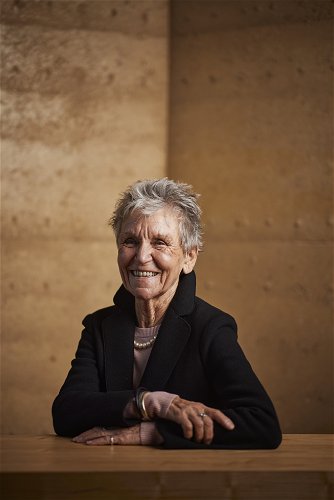
It can be difficult to sell tickets to art song recitals and Andrea Katz says she hears similar reports from colleagues all over the world. She would like a prominent public figure to let people know what they are missing out on. Someone who would say, ‘You need to listen to this music. This music should be in your life.’ Hypothetically, Stephen Fry comes to my mind as a suitably authoritative and popular spokesperson for art song but Andrea’s devotion to this music might be infectious enough until he joins the cause.
Andrea first worked with Robin Tritschler in the United Kingdom at the Aldeburgh Festival – established by Benjamin Britten and Peter Pears in 1948. Andrea and Robin were there preparing Mozart’s unfinished opera, Zaide, with a little time left for other songs. She jokes that Robin selected ‘seventy-five million Hugo Wolf songs and particularly the most difficult ones to play on the piano.’ As she approached the practice room, she heard someone playing sections of these songs. It was Robin at the keyboard and his deep engagement with Wolf’s difficult piano writing impressed Andrea immediately.
For UKARIA, Robin has selected songs featuring the poetry of Heinrich Heine. Andrea confessed that she found the program’s throughline a little obscure at first, but soon the reason and rhythm of Robin’s choices became clear. And now, she views this recital as being ‘almost like a mosaic’
where each song has a musical connection with the next and an important place within the whole.
PROGRAM
Giacomo Meyerbeer
Komm! [1']
Johannes Brahms
Sommerabend, Op. 85 No. 1 [2']
Clara Schumann
Sie liebten sich beide, Op. 13 No. 2 [2']
Frederick Loewe
Der Asra, Op. 133 [3']
Felix Mendelssohn
Reiselied [3']
Johannes Brahms
Meerfahrt, Op. 96 No. 4 [3']
Adolf Jensen
Lehn deine Wang’, Op. 1 No. 1 [2']
Felix Mendelssohn
Auf Flügeln des Gesanges, Op. 34 No. 2 [3']
Franz Liszt
Anfangs wollt’ ich fast verzagen, S311 [2']
Johannes Brahms
Mondenschein, Op. 85 No. 2 [3']
Es schauen die Blumen alle, Op. 96 No. 3 [1']
Anton Bruckner
Frühlingslied, WAB 68 [2']
Felix Mendelssohn
Neue Liebe [2’]
Camille Saint-Saëns
Clair de Lune [2’]
Nikolai Rimsky-Korsakov
A Firtree Standing Alone, Op. 3 No. 1 [2’]
Edvard Grieg
Eingehüllt in graue Wolken [2’]
Sergei Rachmaninov
My child, you are beautiful as a flower, Op. 8 No. 2 [2’]
Frank Bridge
All things that we clasp [3’]
Pyotr Ilyich Tchaikovsky
Why?, Op. 6, No. 5
INTERVAL
Robert Schumann (1810–1856)
Dichterliebe, Op. 48
The poetry is paramount to her thinking about these songs, it is ‘the glue that holds all of this together,’ and because Heine is so distinctive she has found great interest in the ways different composers related to him. When Robert Schumann was a young man he met Heine, and the poet treated him with generous hospitality. Heine’s kindness was a little unexpected. Fanny Mendelssohn, for example, thought that he was a difficult person, though she acknowledged he was a great poet.
About the poetry, Andrea agrees wholeheartedly. ‘A genius like Heine, in four lines, can tell you the history of the universe,’ she says, and then a composer ‘comes and puts that into music and gives you an even deeper understanding of that history of the universe, of the things that the words cannot say.’ The final song in Schumann’s Dichterliebe provides a famous example of this. After the text has run its course, the piano offers an instrumental postlude. For Andrea, it is in moments like this that Schumann inserts himself most clearly into the story, but she also feels that it is an invitation to go back to the beginning again.
As the pianist, Andrea plays the first and last notes in all of these songs and so provides the program’s connecting tissue. A pianist’s ability to communicate these links with the audience and sustain the overall shape of the program is vital in a recital like this one. Andrea and Robin will need to discuss these structural considerations as well as the interpretation of individual songs when they meet to rehearse.
During our conversation, Andrea also took the time to explain her broader philosophy of the piano’s role in song and how the piano does more than simply accompany the singer. ‘These are not solo songs, these are always duets,’ she says, ‘but let me clarify that, because these are duets with the accompaniment of piano.’ There is the singer who has all the words, ‘but there is always another character’ she says, and this character is played on the piano. The piano allows you to ‘hear the thoughts’ behind the poem, to feel its sentiment and psychology, while also adding harmony and rhythm as an accompaniment.
Of the Dichterliebe, she admits that it is a ‘gift for any good singer to sing it, but the biggest gift is for the pianist.’ In the piano’s postlude, she finds that Schumann ‘put everything there that we know about his own life and his life with Clara, and the past and the future, and there are musical quotes there from everywhere, including his own piano concerto that he wrote for her.’ For Andrea, this offers a clue to understanding the power of song. It is the piano’s enduring invitation to relive the story, again.