




A HANDS-ON COMPOSER: JAKUB JANKOWSKI IN RESIDENCE
BY BEN NICHOLLS
FRIDAY 27 NOVEMBER 2026
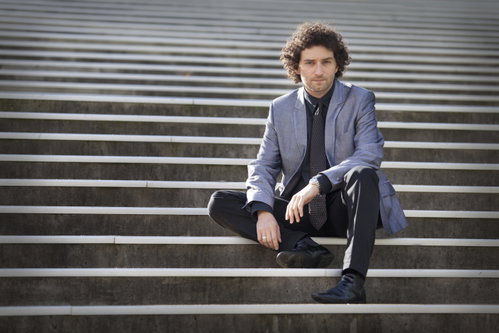
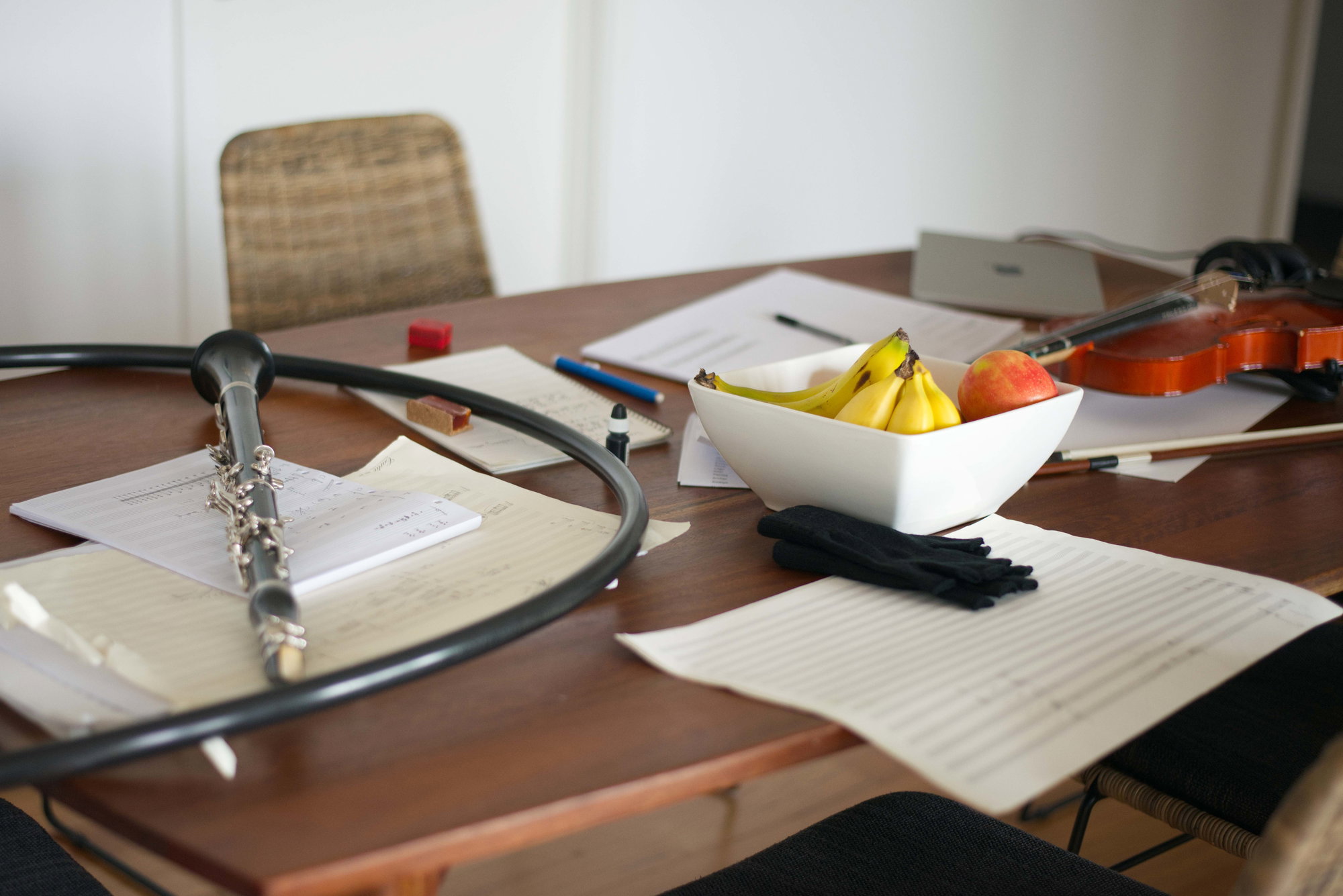
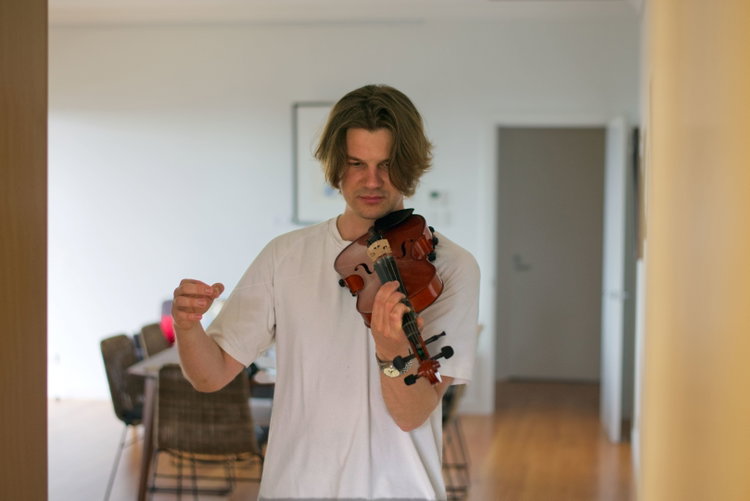
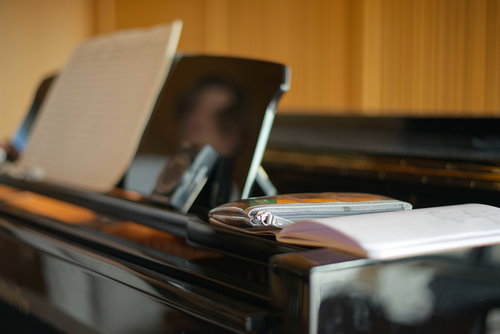
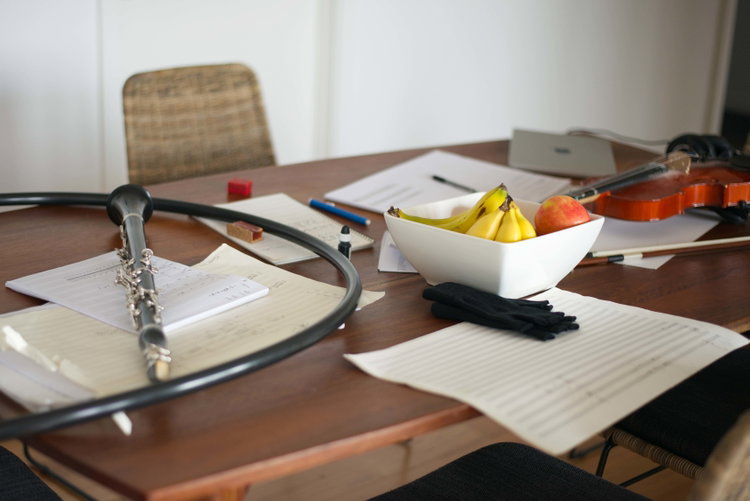
After a cup of tea on the verandah, Adelaide composer Jakub Jankowski gave me a tour of the musician’s workshop he had set up at Twin Peaks. Several notebooks lay open with ideas pencilled in, a Seiko quartz metronome sat on the piano, and a clarinet, violin, bass clarinet and cello complemented the coils of vinyl tubing he had MacGyvered to produce extra-low bass notes. “I’m very much a hands-on composer,” Jakub told me, “at least I’ve discovered that along the way.” His time on this residency had clearly been productive, and in a minor miracle of car packing these instruments and implements had all squeezed in the back of a Hyundai hatch.
The neurologist Frank Wilson has spent his career researching how we use our hands to shape the world and how this activity shapes us in turn. “People are changed, significantly and irreversibly it seems,” Wilson has written, “when movement, thought, and feeling fuse during the active, long-term pursuit of personal goals.”* This is true of all musicians, and I think it helps understand a little about Jakub’s process and how he makes sense of sound as a visceral experience.
A few precious days without neighbours and housemates meant Jakub could teach himself to make new sounds on the clarinet, explore the possibilities of the piano’s three pedals and recreate a folk violin technique used by the late Nicolae Neacșu (of the Romani band Taraf de Haïdouks). With a short stay like this, Jakub says, “you want to make the most of these ideal conditions.” Despite this flurry of musical activity, it has also been something of a retreat for him.
In addition to the modern comforts of the cottage and rehearsal space, Twin Peaks is surrounded by nature. Like the eagles who nest nearby, Jakub found that this vantage allowed him to “pause and consider things from a bigger perspective musically, rather than just grind away.” That bigger perspective also took in a broad sweep of history. “I completely understand why composers like Gustav Mahler settled on a composer’s hut in the woods somewhere,” Jakub told me, “it’s really the perfect workplace.”
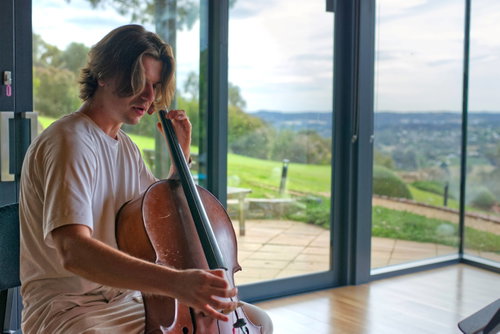
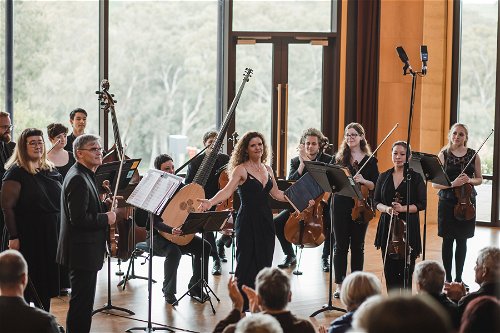
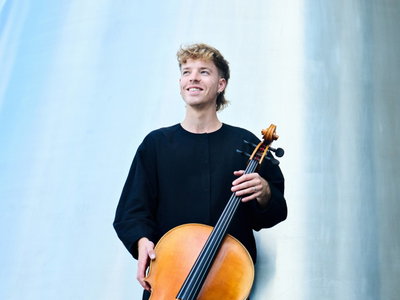
This was his second short residency at Twin Peaks working on a new piece to be premiered at UKARIA in April next year. Scored for violin, clarinet, cello and piano, the ensemble in Jakub’s piece will spotlight Adelaide-born, Berlin-based cellist James Morley who won a coveted place on the roster of the Young Classical Artists Trust (YCAT) in 2024. Jakub and James have known each other since playing in the cello section of the Adelaide Youth Orchestra. Of James, Jakub recalls that it was clear, even as a teenager, “how brilliant his technique was.”
Jakub has written music for James before on commission for Musica Viva in 2023. For that national tour, James joined the French cellist Jean-Guihen Queyras and koto master Satsuki Odamura. In James’s performances of that piece and in works such as Liza Lim’s 'Cello playing ~ as Meteorology (a piece James premiered in 2021), Jakub recognised a performer with “complete earnestness and dedication to the intentions of the composer, and a fearlessness in exploring new sounds.”
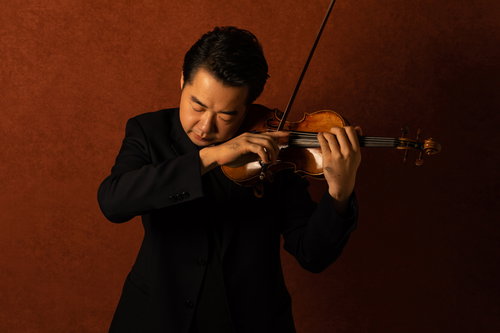
In Jakub's new piece, James will perform alongside three musicians also connected with YCAT: violinist Sini Simonen (former leader of the Castalian String Quartet), pianist Joseph Havlat (Professor of Contemporary Piano at the Royal Academy of Music), and clarinettist Jonathan Leibovitz (a frequent performer at festivals such as Verbier).
Following the UKARIA premiere, Jakub’s piece will feature at the Aldeburgh Festival and Wigmore Hall on tour with the same outstanding ensemble. He has had multiple works toured across Australia with Musica Viva and the Australian Chamber Orchestra, but having a piece toured internationally is new for Jakub. “It’s a big responsibility,” he confessed, “and a great honour.” It has also brought new challenges and a search for different materials.
For this piece, Jakub is searching for ways to produce a few extremely low notes. When on tour, he said, it can be “hard enough to bring a bass clarinet, let alone a contrabass clarinet.” And so, his solution is to “use a makeshift pipe connected to a clarinet mouthpiece to get those similar sounds.” I heard a prototype version of this bootstrapped bass instrument and was surprised by the richness of its tone.
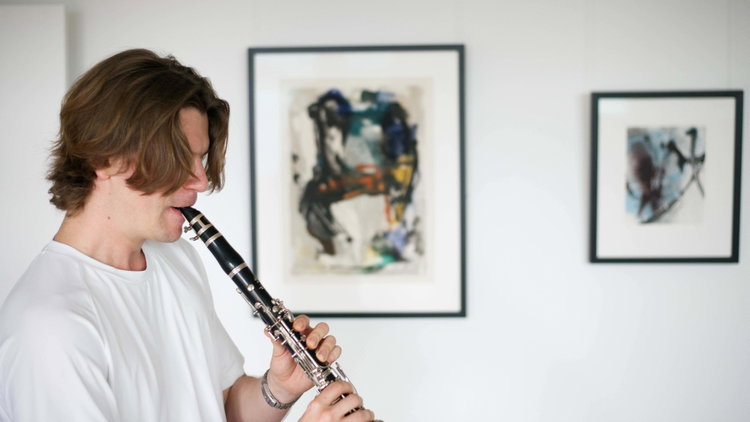
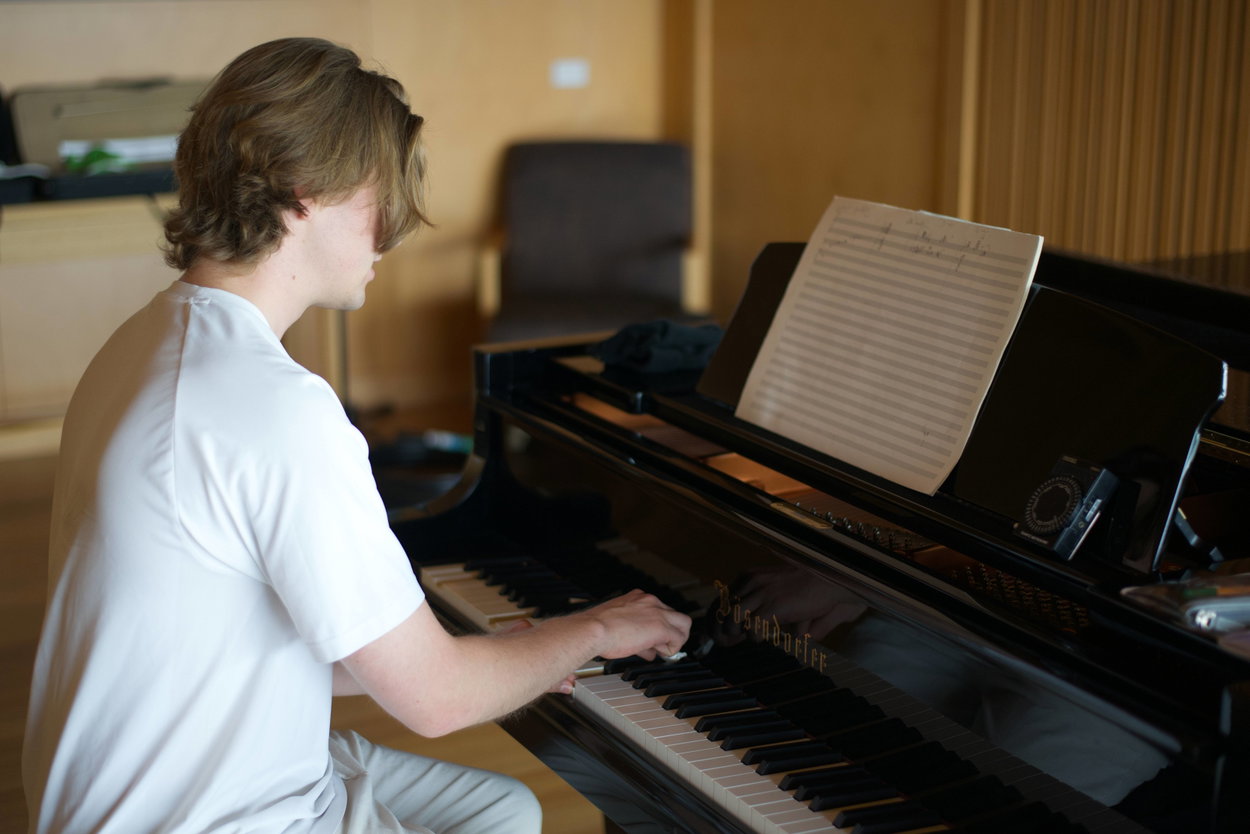
Jakub’s experiments with instruments and other ways of making sounds go hand in glove with an enormous amount of care for the playability of what he is writing. This sort of effort has clearly comprised a large part of the work during his residency. It is all towards making “whatever techniques or sounds that I’m using feel meaningful and poetically embedded in the musical world the piece inhabits.” Jakub’s careful and hands-on approach gives his music meaning, which is then translated by performers to audiences.
When I called Jakub again a few days later, he told me that one of his cello students was curious about a new string technique that might feature in the piece. The student suggested that a nylon fishing line could create a better effect than the horsehair traditionally found in violin bows. After our call, Jakub said he was off to the hardware store.
* Frank R. Wilson, The Hand: How its use shapes the Brain, Language, and Human Culture (Vintage Books, 1998), 6.