

.jpg?class=grid1)


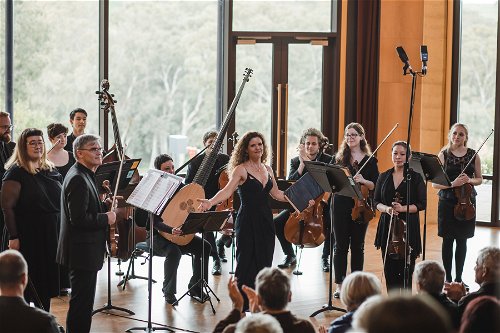

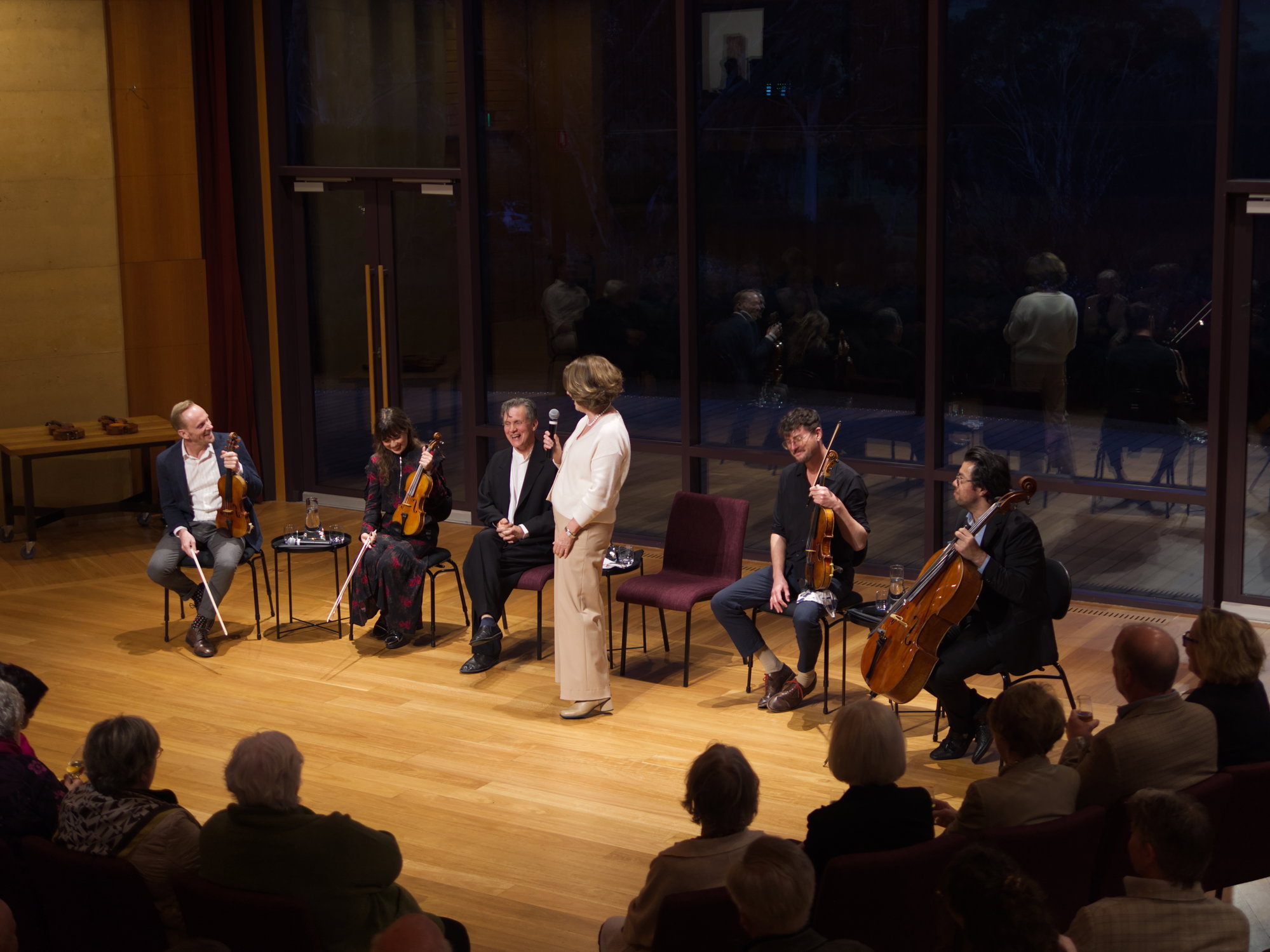
ROBERT BREWER YOUNG: THE BEAUTIFUL SYMMETRY BETWEEN VIOLINMAKING, CONSERVATION AND PHILOSOPHY
BY TAHLIA LAMEY
FRIDAY 25 SEPTEMBER 2026
In September, luthier Robert Brewer Young spent five days in residence at UKARIA, “augmenting the conservation status” of the four Guadagnini instruments in our collection. As Ben and I drove up to the cottage at Twin Peaks to meet Robert in his makeshift workshop, we were cognisant of his reputation as one of the world’s leading violinmakers and conservators. Trained in the Carnegie Hall artist’s studios, Robert is now Head of Scientific Research and Conservation at J & A Beare, London, and a Director at W. E. Hill & Sons. From his workshop on the upper floor of Beare’s London establishment to private collections across Europe, America and Asia, Robert has cared for scores of instruments by Stradivari, Guarneri and other classical Italian masters. His clientele includes members of the Stockholm, Los Angeles and New York Philharmonics, the San Francisco, Seattle and Shanghai Symphonies, Harvard University and The Metropolitan Museum of Art. He is also a Visiting Scholar at Oxford University and on the faculty of the European Graduate School in Switzerland as a lecturer in philosophy.
When Robert greeted us at the door, his humility and gentleness were immediately striking, and as the conversation rolled on, his own account of this phenomenal resume was peppered with humour and surprise. “I became a violinmaker to support my philosophy habit. I was going to grad school in New York and wanted a way to support myself to do philosophy for love and not for money (and to not have to teach Introduction to Existentialism in some God-forsaken backwater in America). New York was an incredible place to study at the time, and while at grad school, I was playing cello as an adult beginner. I met a French violin maker, and became his apprentice for five years, which was fantastic. I did very traditional, nineteenth-century-style French training. At the same time, I was doing a master’s and then went on to PhD work in philosophy. Both of them became total obsessions – big time,” Robert chuckles. I sense that this equal triangle of the academic, practical and transcendent recurs throughout his life’s work, shaped by an insatiable quest for truth and beauty.
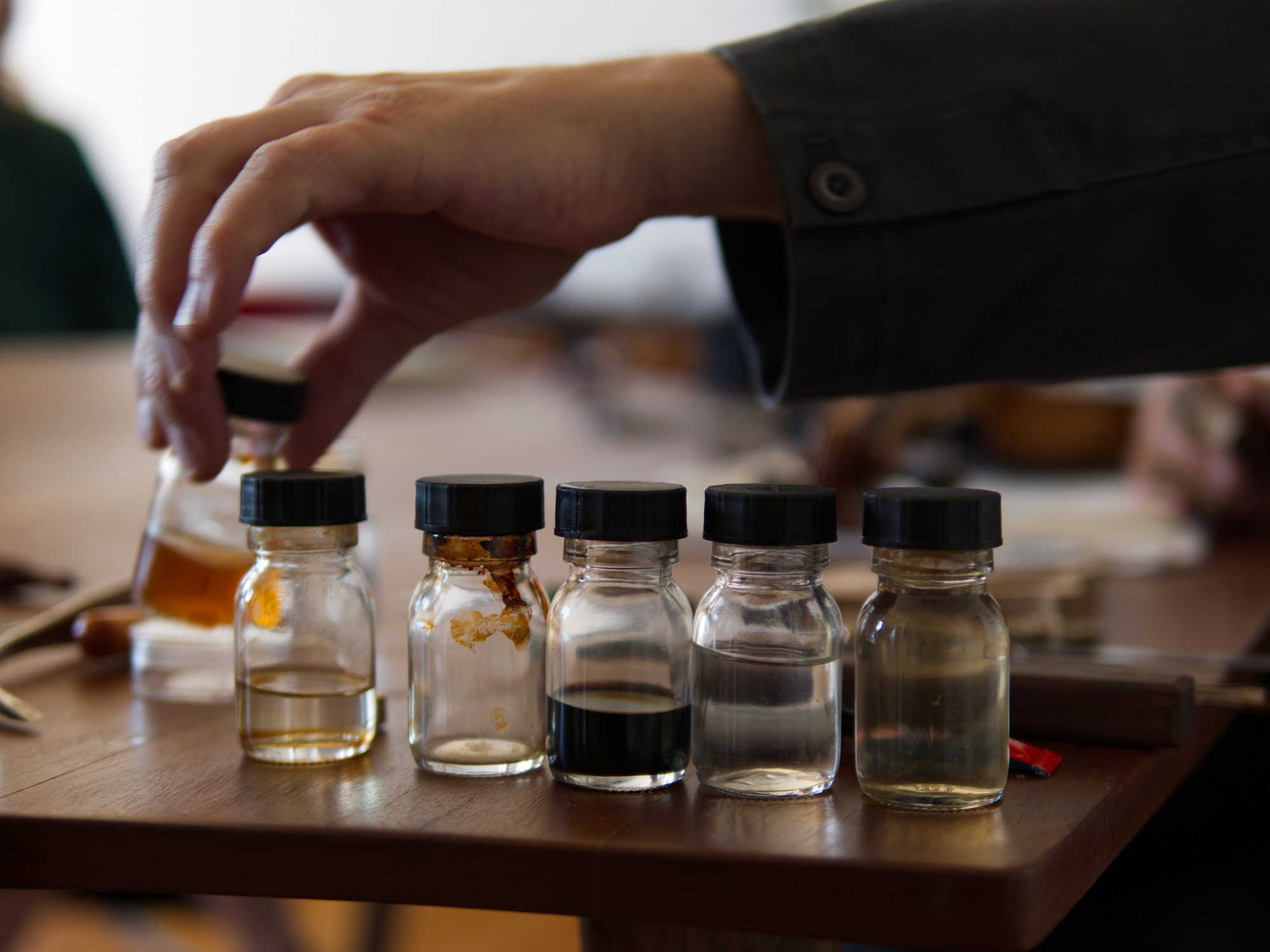
The tactile element of Robert’s craft is apparent as we watch him give Dale Barltrop’s 1784 Guadagnini violin a “glow up”. Robert talks us through what he’s working on: “The main purpose of being here was to continue with the care and conservation of these instruments that I have been fortunate to be involved with for a few years now. We did a fairly significant intervention on the instruments a couple of years ago to make them feel and sound better for the players, so part of the idea is to make sure everything is looking and sounding its best.” With the Australian String Quartet in Adelaide, Robert is able to spend time in conversation with the musicians, and tend to the whole quartet of instruments at once. “Some of what that involves is just basic cleaning. There’s very little to do because of how well they take care of everything, which is awfully inspiring.”
Robert picks up one of the little bottles on his desk. “Just doing some alchemy here,” he says. One of the key materials Robert uses is a conservation wax that he developed for Hill & Sons in dialogue with the conservation department at The Met in New York. “I use quite traditional materials, with the exception of the wax, which I would say is high tech and advanced. It’s all plant chemistry – I’m only working with natural materials and essential oils, which I think Ulrike would appreciate.” It's like hand cream for the violin.
The element of transcendence is at the fore in Robert’s relationship with the sound of the instruments and their abiding history. He sees this mirrored in UKARIA’s collection, and is able to speak into this topic from a truly global standpoint. He reflects on a particularly poignant moment when he heard the Australian Chamber Orchestra perform to the film River in London: “The da Salò is a mythical bass, so as someone who’s been involved and interested in basses for a long time, I’ve known about this instrument. I’ve also had the opportunity to have Maxime come into Beare’s and work on the bass with him – totally exciting to have that kind of dynamic relationship. But at that concert, I could not believe the sound of the bass – the way it just filled up the whole space and grounded the orchestra.”
The responsibility of custodianship is tightly entwined with the art of conservation – as Robert puts it, “these instruments have survived 300 years, so how does the dialogue we’re having affect the next 300 years of their lives.” There is a great deal of gravitas to this proposition, but Robert offers a word of encouragement. “I find the UKARIA collection particularly exciting because the level of care is so high, and I would say that’s more rare than it should be. It’s setting a high bar for management of a collection, interaction with the musicians and validating the experience of the musicians. For me, what’s exciting about the collection is that it’s not just instruments parked with some musicians – there’s a more integrative quality.”
Robert observes that this is parallelled in Ulrike’s vision to care for the land. “Of course you have this space, and there’s a gathering around that. To see the land conservation at Twin Peaks combined with an historical instrument conservation project maintains an ethos that I find quite beautiful to be close to. It is really, really significant – the care of these instruments, the care of the land, the care of the conversation all linked in a very beautiful way. That’s rare. I’d say it might be the only place where it’s actually happening that I’ve ever seen. There are other instances of it – let’s say attempts towards something in that direction – but not actually so coherent and fluid as it is here.”
The curation of our instrument collection has been made possible through the generosity of many donors. Again, there is something transcendent about this which Robert appreciates: “The community that’s been built around the collection – the broader support and interest amongst the audience and public – is also super exciting.” We are delighted and grateful to count Robert among this community, and look forward to continuing our work together into the future.
In the video below, Robert discusses his work on Dale Barltrop’s 1784 Guadagnini violin:
Photos and video by Ben Nicholls, 10 September 2026