





‘A KIND OF INCREDIBLE EMOTIONAL MIRACLE’: CÉDRIC TIBERGHIEN ON MEMORY AND MUSIC
BY BEN NICHOLLS
FRIDAY 27 FEBRUARY 2026
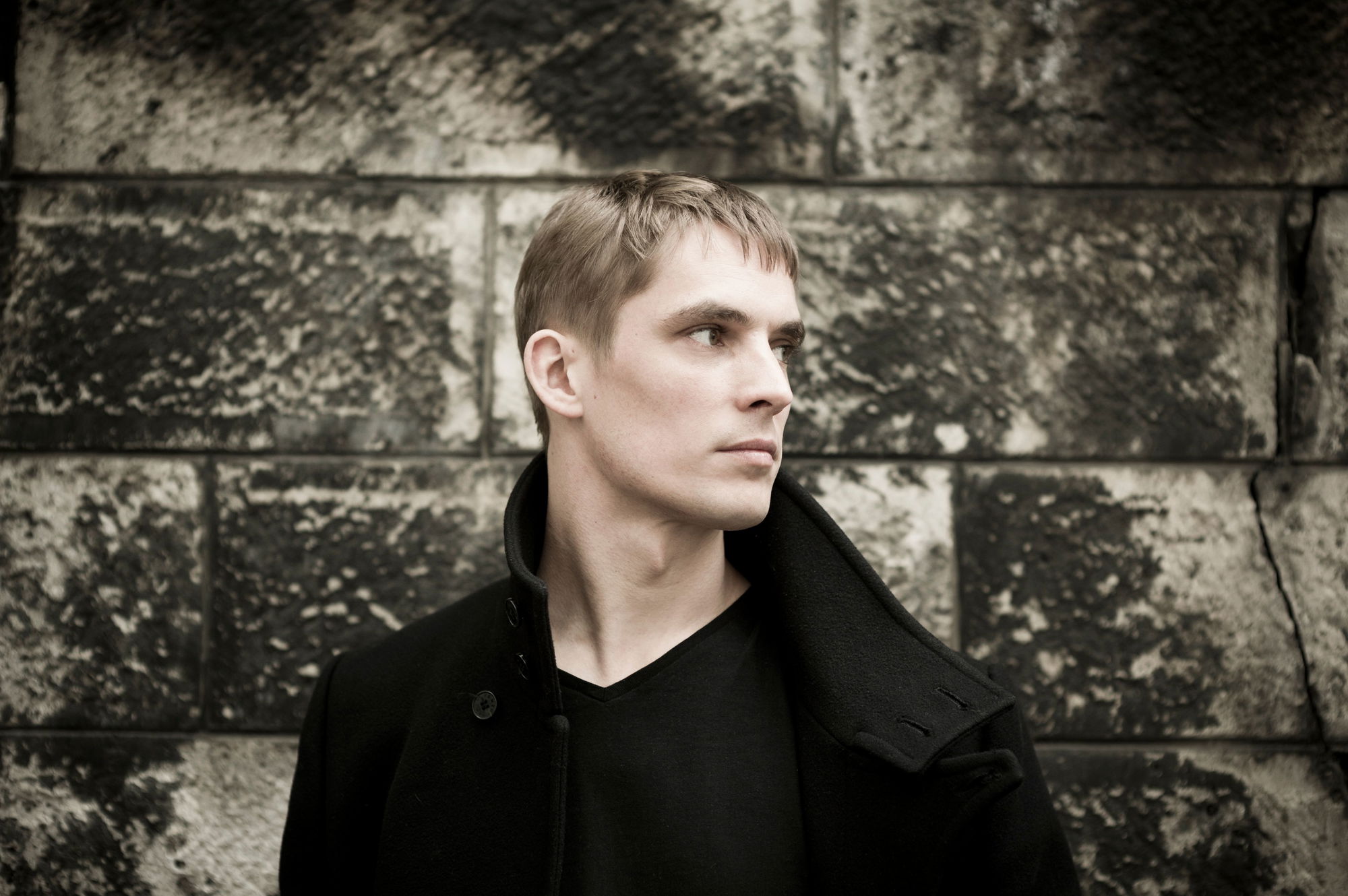
Cédric Tiberghien is known for building concert programs with great care and attention to detail. When we meet on a video call, he describes the process via analogies to the work of curators and chemists. ‘It always takes a lot of time for me to build programs,’ he confesses, ‘because I’m very interested in challenging audiences.’ Not in the sense of ‘defying them but it’s just trying to almost be a curator, you know, like in an exhibition.’ Combining music in new ways offers different perspectives and ‘suddenly it opens new horizons, new visions.’ This is what he hopes to create in his recitals and like any good performer, his first instinct is to think of the audience. He starts with the fact that everyone has a ‘musical background – whatever music, whatever kind of music it is – and our artistic sensitivity reacts to those memories.’
If recitals did not have this element of experimentation, I get the impression that Tiberghien might prefer to make more records or perform more concertos. ‘It’s really difficult to come with a program with just Ravel or just Debussy, it needs, we need, this kind of, yeah, challenge,’ both a ‘mind challenge and soul challenge.’ It reminds me of Andrew Ford’s The Memory of Music when he champions musical diversity, ‘Narrowing of taste, though, is always to be fought against, because it narrows our lives.’* Tiberghien challenges audiences – gently but consistently – to broaden their taste and he often does this with creative programming.
He has been planning this recital for two years, but the idea was planted when he released his first album twenty-six years ago. His debut recording was a selection of Claude Debussy’s solo piano music, including several pieces on the program for this concert: Images Book 1, and L’Isle Joyeuse. Tiberghien says ‘that’s really how it started, from this little piece by Debussy called Homage à Rameau’ in the first set of Images. He recalls learning the piece as a teenager, and his teachers explaining why Debussy had returned to the Baroque music of Jean-Philippe Rameau: he was looking to escape the influence of composers like Wagner and ‘the extraordinary power of Romanticism to a new thing.’
Debussy started writing the first set of Images in 1901 as he searched for this new thing. For Tiberghien, this is a classic example of musical bravery, of someone ‘just turning towards what’s coming next, even if we don’t know what it is.’ As he now tells me, ‘Debussy thought, okay, to do that I need to go back to what was before Romanticism, and the French part of it was the eighteenth-century masters.’ To increase the general public’s access to this music, Debussy and his contemporaries (including Maurice Ravel) set to work preparing and publishing new editions of music by Rameau and François Couperin.
PROGRAM (Second Half)
Claude Debussy (1862–1918)
Images, Book 1 L. 110
I. Reflets dans l'eau
II. Hommage à Rameau
III. Mouvement
Jean-Philippe Rameau (1683–1764)
Pièces de Clavecin, Book 2
L'Entretien des Muses (1724/1731)
Julian Anderson (b. 1967)
Etude No. 4 – Misreading Rameau
Rameau: Nouvelles Suites de Pièces de Clavecin (1728)
VII. Les Sauvages
VIII. L’Enharmonique
IX. L’Egyptienne
Debussy: Douze Études L. 136
VI. Pour les huit doigts
VIII. Pour les agréments
Debussy: L’isle Joyeuse L. 106
PROGRAM (First Half)
Maurice Ravel (1875–1937)
Le tombeau de Couperin, M. 68
Interwoven with
François Couperin (1668–1733)
Pièces de Clavecin, Book 4
Ravel: I. Prélude
Couperin: 21e. Ordre, No 1: La Reine des cœurs
Ravel: II. Fugue from Le tombeau de Couperin
Couperin: 21e. Ordre, No 2: La Bondissante
Ravel: III. Forlane from Le tombeau de Couperin
Couperin: 21e. Ordre, No 3: La Couperin
Ravel: IV. Rigaudon from Le tombeau de Couperin
Couperin: 21e. Ordre, No 4: La Harpée
Ravel: V. Menuet from Le tombeau de Couperin
Couperin: 21e. Ordre, No 5: La petite Pince-sans-rire
Ravel: VI. Toccata from Le tombeau de Couperin
Tiberghien relates to Ravel’s Le Tombeau de Couperin (The Tomb of Couperin) differently than to Debussy’s Homage à Rameau, partly because he did not learn the Ravel as a teenager. But Ravel’s suite reflects a close engagement with the French Baroque and Tiberghien still sees it as ‘an incredible mix of who [Ravel] was at the time’ and of ‘remembering what was before.’ When Tiberghien then found a set of Couperin pieces in E minor, the same key as Le Tombeau, he thought ‘okay, let’s be adventurous and let’s mix it the same way a curator in an exhibition would.’ The movements from both works will be layered one after the other with results that are a little mysterious, ‘there’s even moments where you’re not sure anymore if it’s still Ravel or is it Couperin, because Couperin was very modern in his time, exploring incredible dissonances, special writings, ornaments, and Ravel was going back to that.’
When these memories collide, Tiberghien hopes that ‘suddenly, we don’t really care if it was composed in the eighteenth century or in the twentieth century.’ Within this vision, Julian Anderson’s Etude No. 4 – Misreading Rameau offers a complementary twenty-first century perspective. Tiberghien says that Anderson ‘took the score of a little piece by Rameau and just misread it. Basically the key, the accidentals are different, the rhythms are different, suddenly, the left hand is playing the right hand, and it goes crazy, but it’s, if you look at the score, it’s exactly Rameau’s score.’
This gap between how something looks and how it sounds gets to the heart of good programming and how it can create something greater than the sum of its parts. Tiberghien finds a similar riddle in the music of Ravel. ‘That’s the paradox of Maurice Ravel,’ he says, ‘composing something so precise and so you can explain everything, everything is so perfect, you know, like it has been cleaned, it’s like a little watch working perfectly, and still, there is a kind of incredible emotional miracle that you cannot really explain from the score. And that’s exactly what’s happening with Couperin.’
Near the end of our conversation, he compares programming to a chemical reaction. When it works, maybe you see that ‘oh, it goes blue, wonderful,’ and, he adds, ‘so that’s the kind of happiness I want to share with people.’ This is the miracle of live performance, its risk and reward. Of course, Tiberghien knows this and so he gently sidesteps a final question about curation. ‘We’ll see on stage what happens.’
COMING UP


*Andrew Ford, The Memory of Music (Black Inc., 2017), p. 20.
This story features SoundCite integration indicated by grey text highlights. If you tap or click those highlights you can hear Cédric speaking.
Sounds Cited:
Interview with Cédric Tiberghien, Monday 16 February at 6.30pm (ACST) / 9.00am (CEST).